VAMUdeS
Summary
Context — I was part of VAMUdeS, Université de Sherbrooke's autonomous drone team, from 2016 to 2018, and we competed every year at AUVSI-SUAS.
Problem — The goal was to build a fully autonomous aerial surveillance system that could find, identify, and geolocate ground targets from a vibrating drone flying 60 m above the ground at 20 m/s — and to do it better than every other university team at the competition.
My role — I led the georeferenced surveillance system, the ground-station control GUI, the RF and antenna design (including managing interference between the manual pilot, autopilot, and camera links), and the network QoS for an often-terrible air-to-ground link. I also co-designed one of our hexacopter platforms.
Outcome — We won AUVSI-SUAS three years in a row — 2016, 2017, and 2018 — with a verified raw geolocation accuracy of 3 m under those flight conditions.
Stack — Embedded flight avionics, custom RF and antenna design, networking with QoS, a Python ground-station GUI, geofencing and obstacle-avoidance algorithms.
The long story
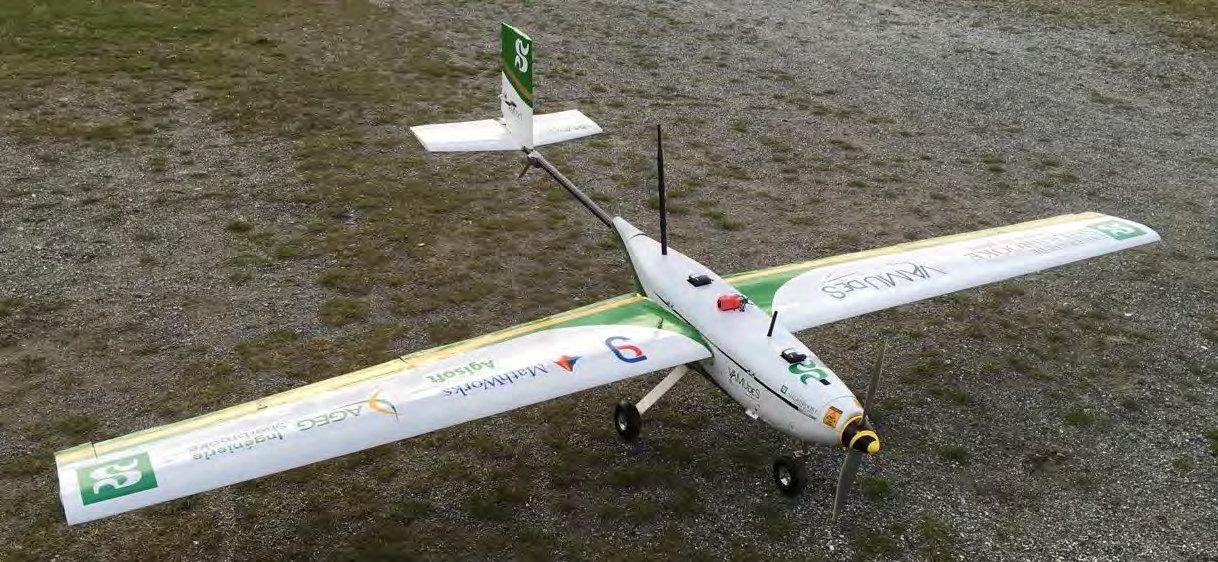
I joined VAMUdeS as soon as I started my electrical engineering undergrad. It was a lot of fun and definitely the best part of my studies. The projects I led include:
- Create a georeferenced aerial surveillance system with a verified 3 metres raw accuracy (from a vibrating drone flying 60 metres above ground at 20 m/s)
- Design a control GUI to monitor and control said surveillance system, including filtering data based on geofences
- Upgrade the three antenna systems and manage RF interference between the manual pilot, autopilot, and camera antennas
- Design a hexacopter drone from the ground up (although the frame was adjusted with simulations from another mechanical engineering student)
- Implement network QoS for an aerial surveillance system with sometimes very poor bandwidth
- Create obstacle avoidance algorithms
- Design a few power circuits to keep the drones flying
- Pass on the knowledge to the next generation of Vamudiens
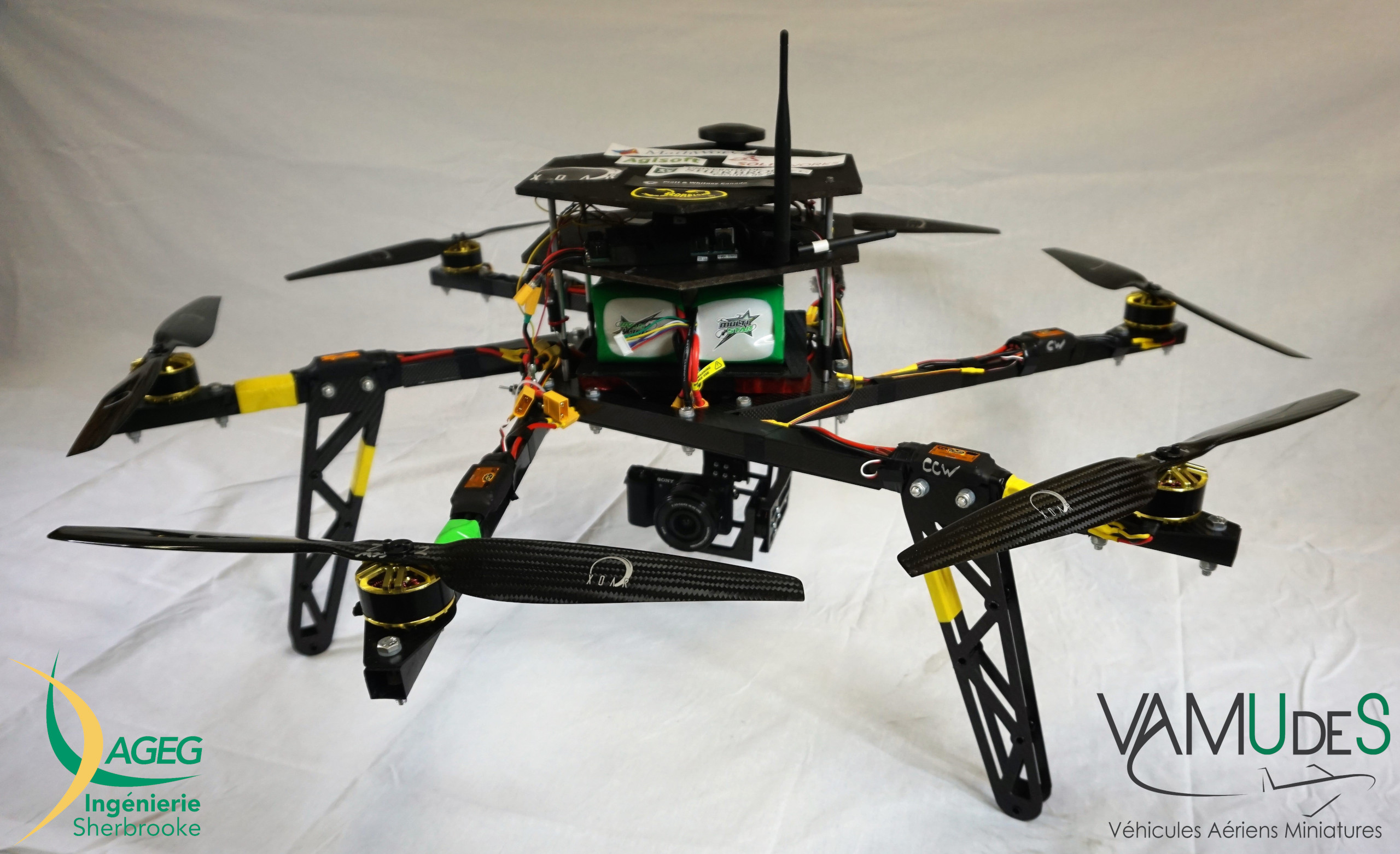
Our crowning achievements include winning the AUVSI-SUAS competition three years in a row. Check out our team's 2016, 2017 and 2018 technical report papers to learn what this is all about.